THE APPROACH: WHY TAPE ART?
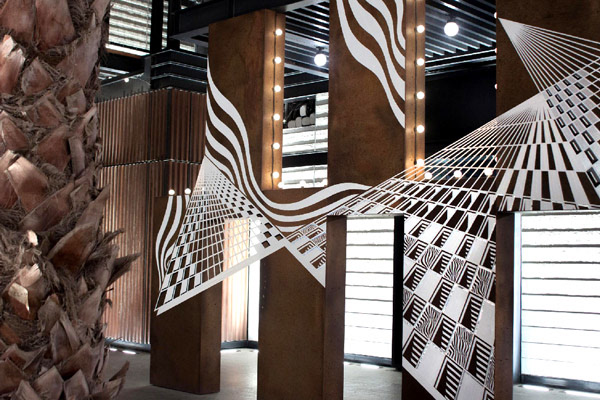
Most people are afraid of a blank piece of paper or an empty canvas. "I can't draw" is the most common phrase at the beginning. Tape Art breaks down this inhibition in a split second. A strip of tape isn't a wet brushstroke you have to regret—it's forgiving. If the line doesn't fit, you simply peel it off. This error-friendly nature of the material removes performance pressure and creates an atmosphere where even absolute beginners get straight into making. It's not about perfection, but about the courageous first cut.
THE DYNAMICS: WHAT HAPPENS IN THE ROOM?
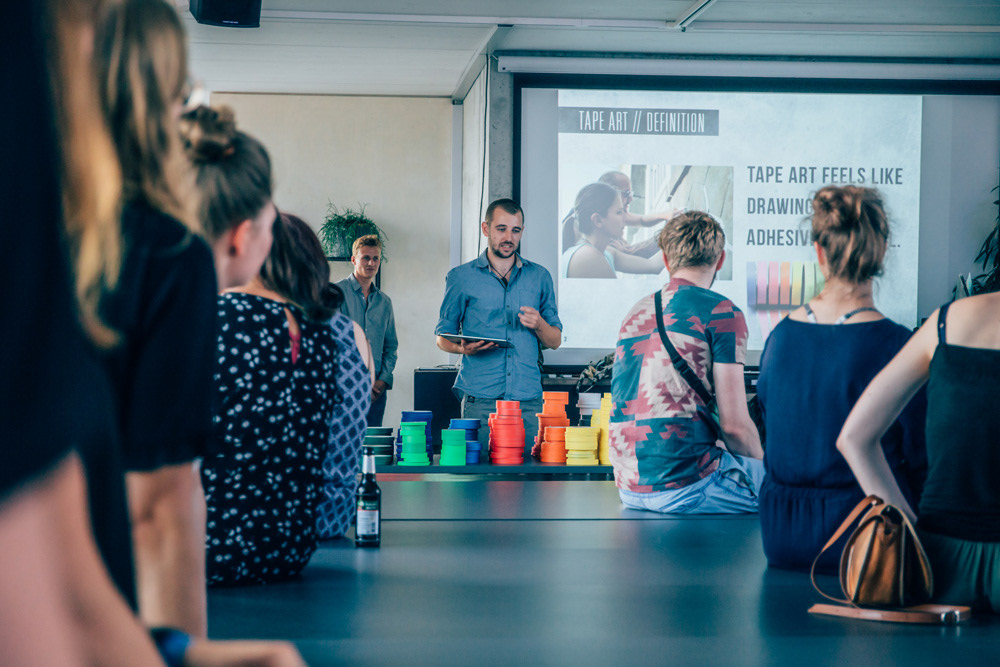
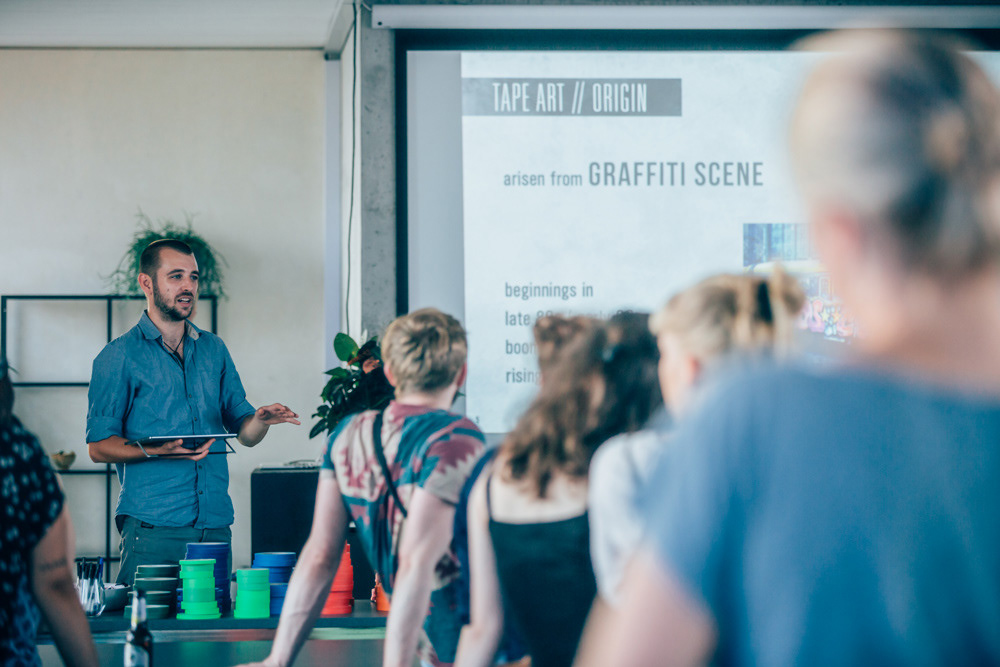
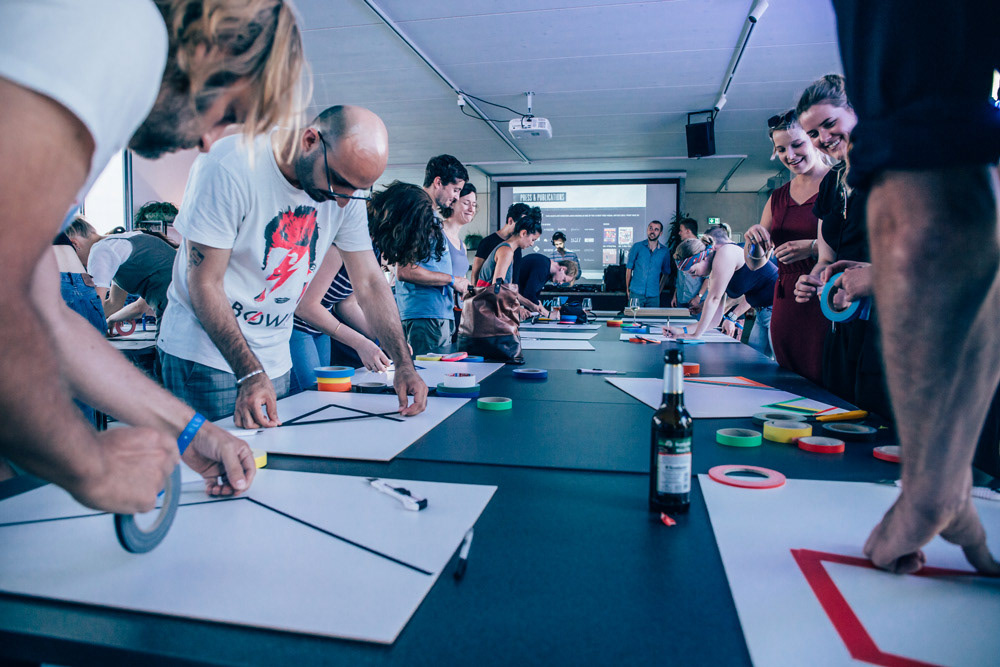
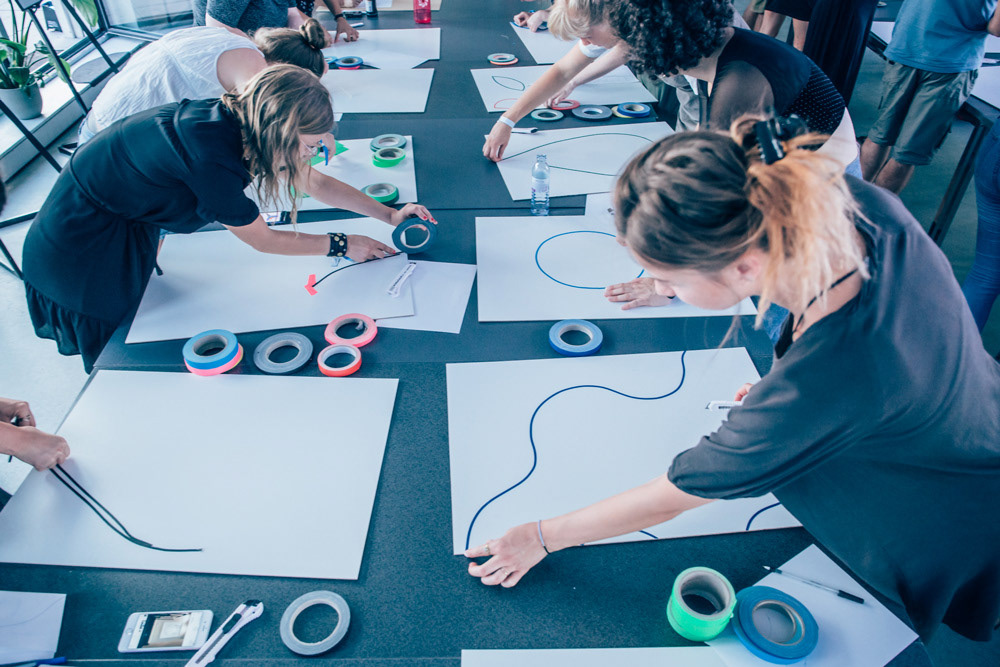
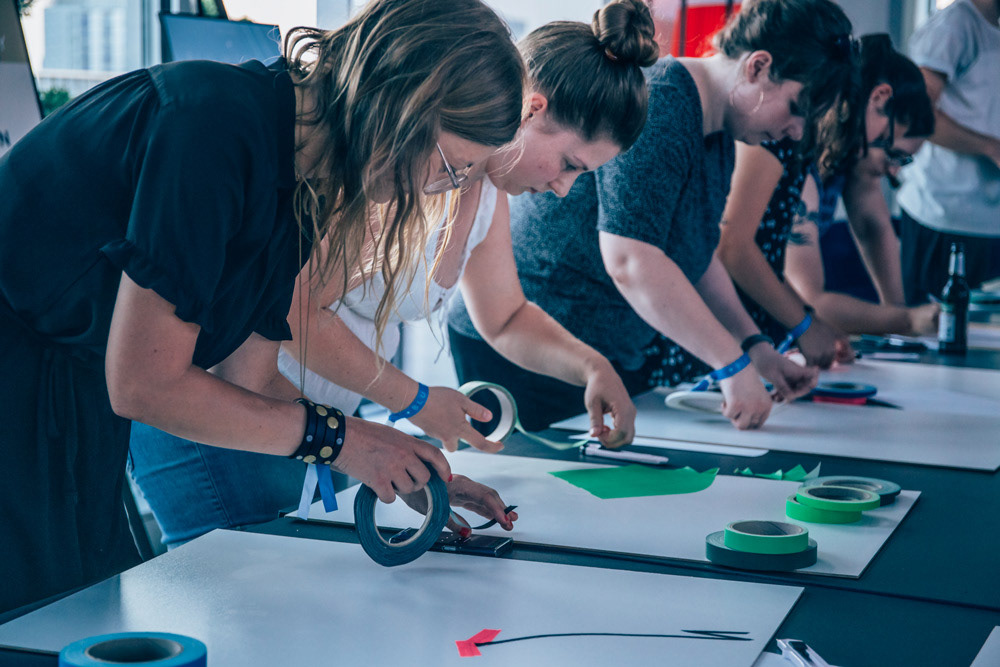
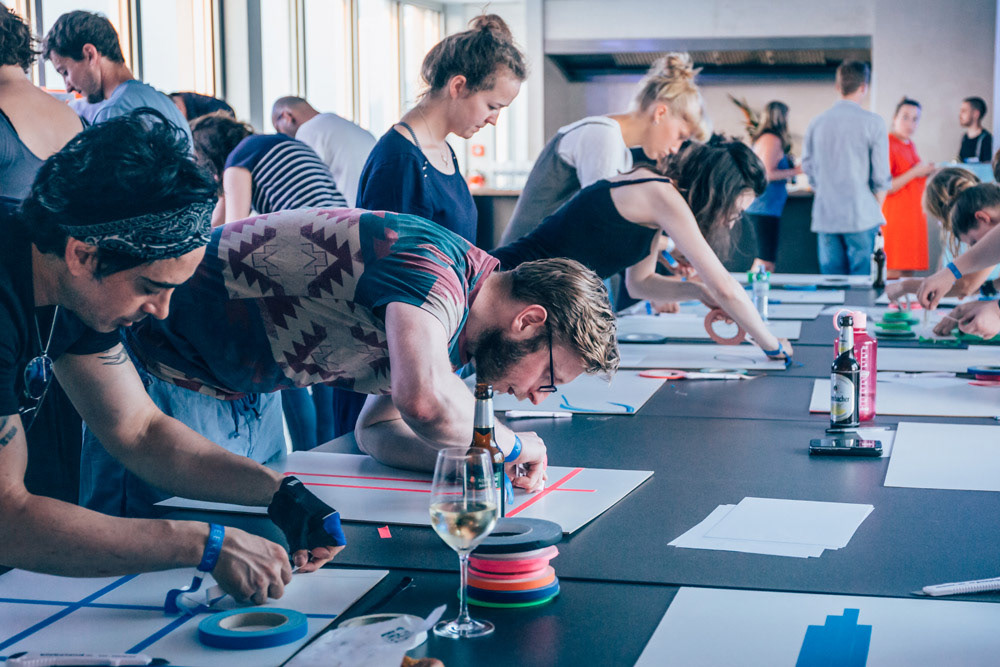
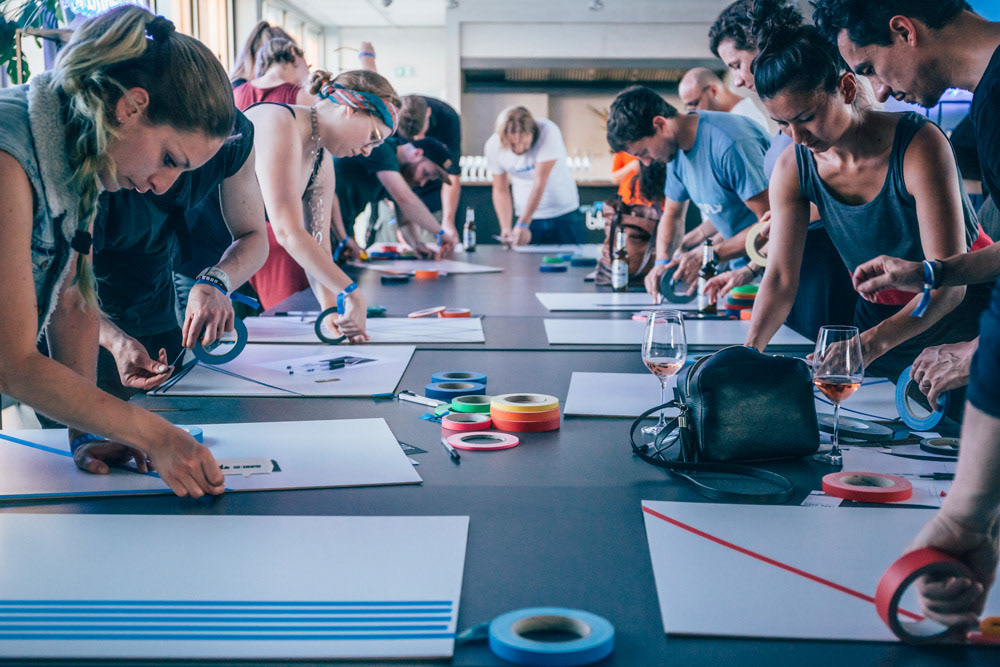
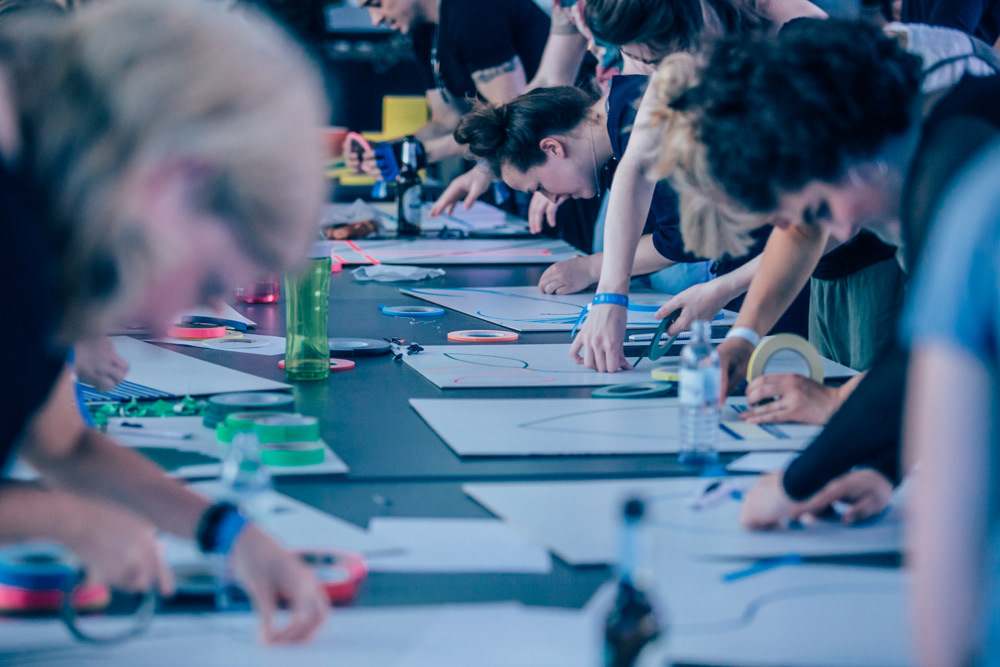
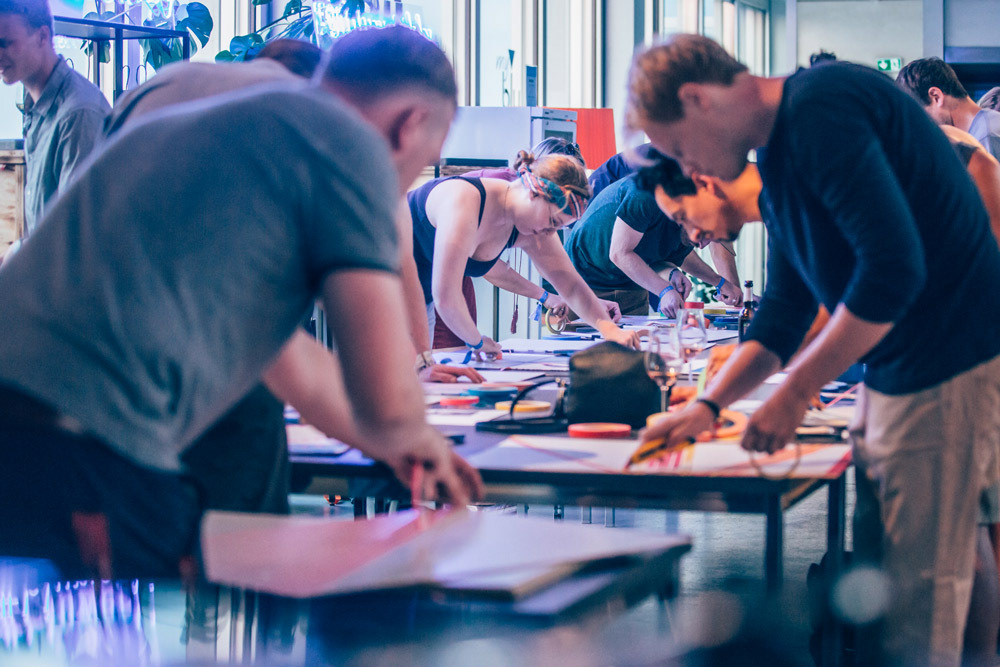
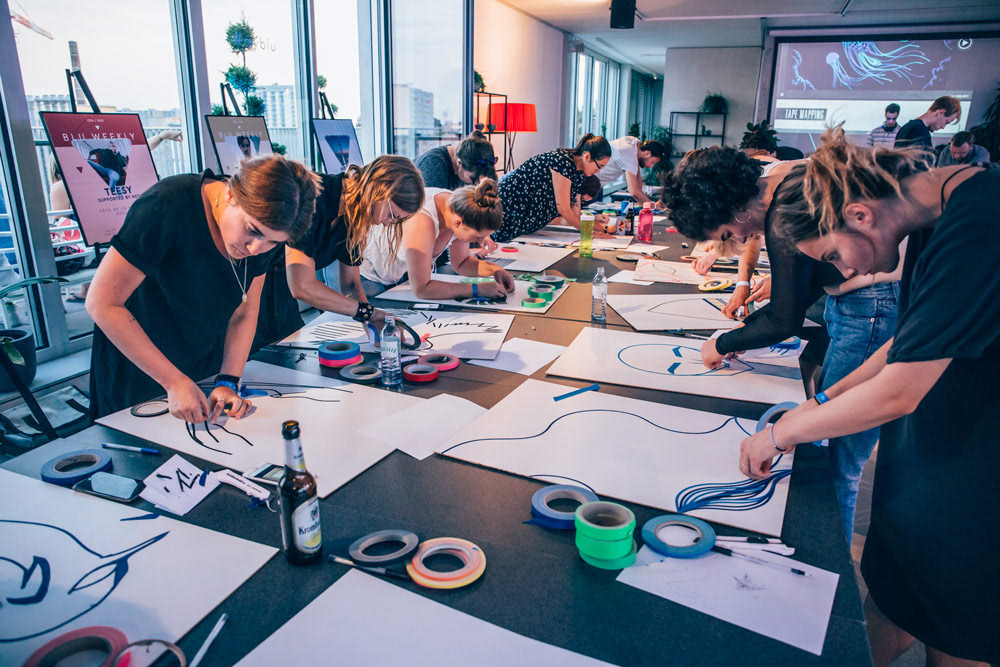
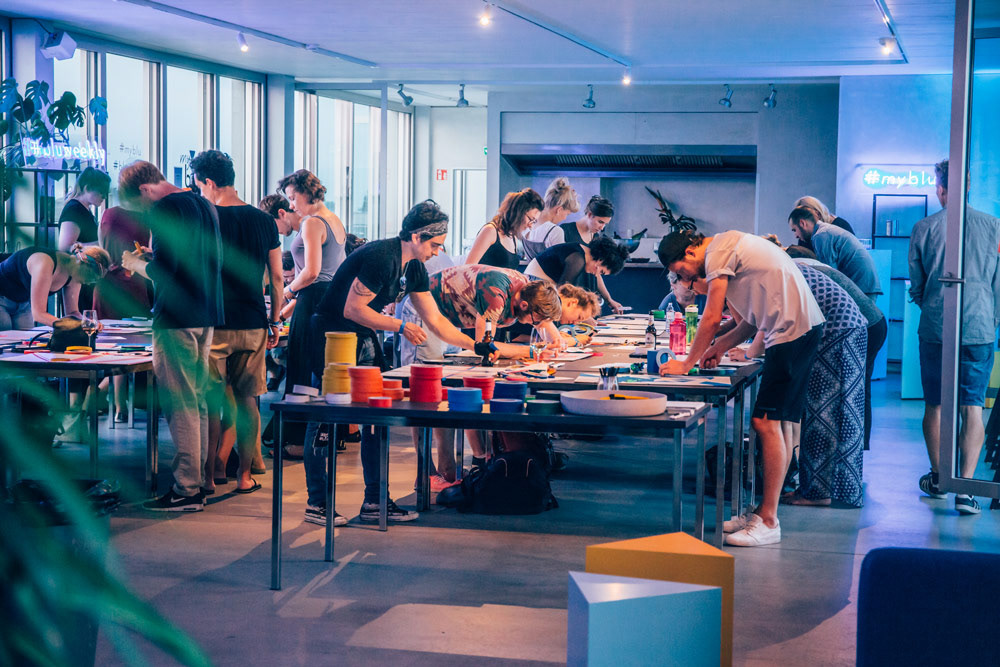
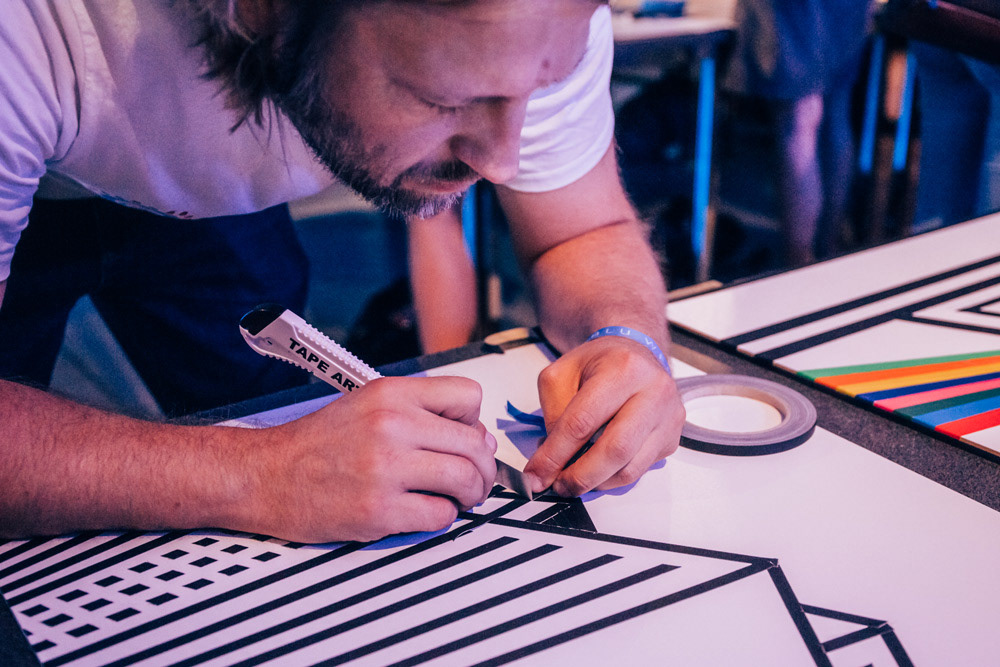
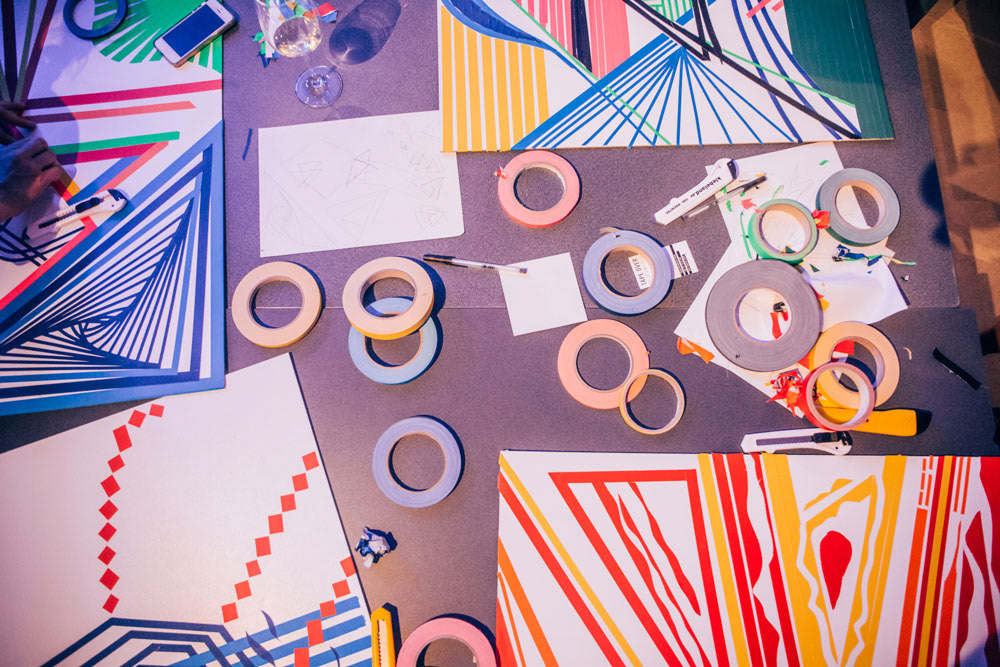
A TAPE OVER workshop isn't a silent art class; it's a dynamic flow state. Participants get a quick briefing on basic techniques (cutting, tearing, layering, taping curves) and are then let loose directly on the materials.
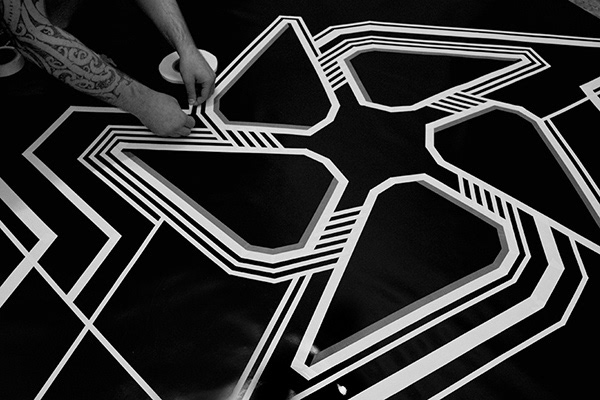
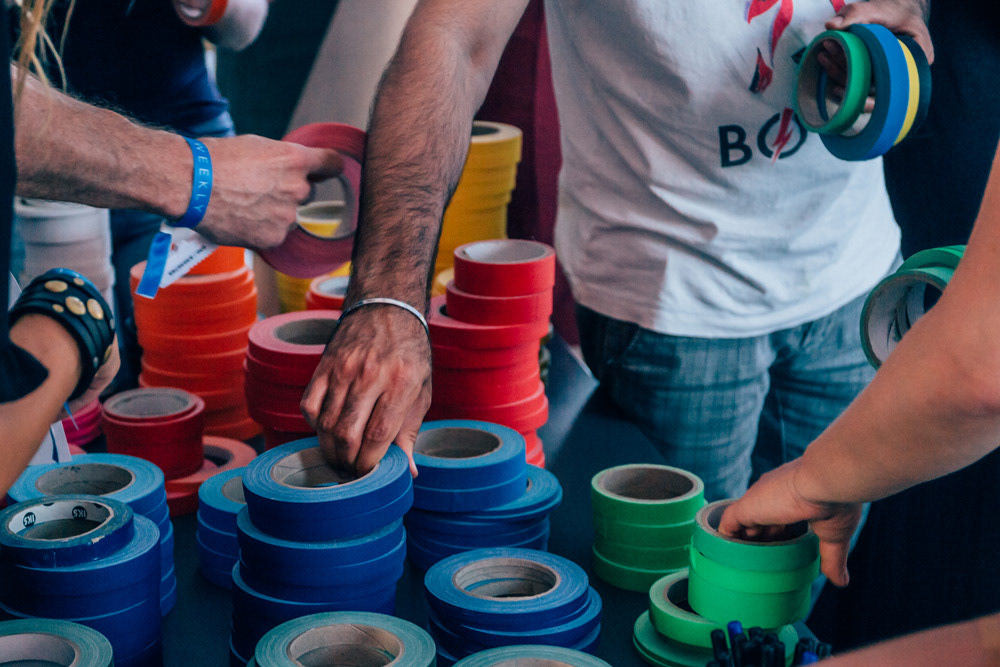
- From Head to Hands: The tactile experience of pulling the tape from the roll and feeling the tension of the material brings participants out of their cognitive daily routine and back into physicality.
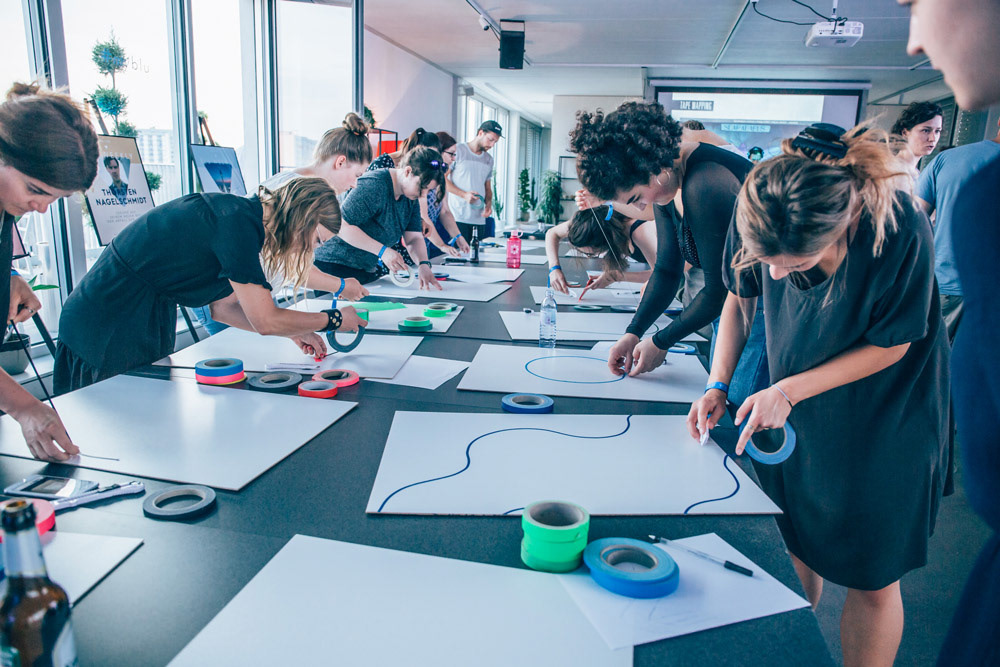
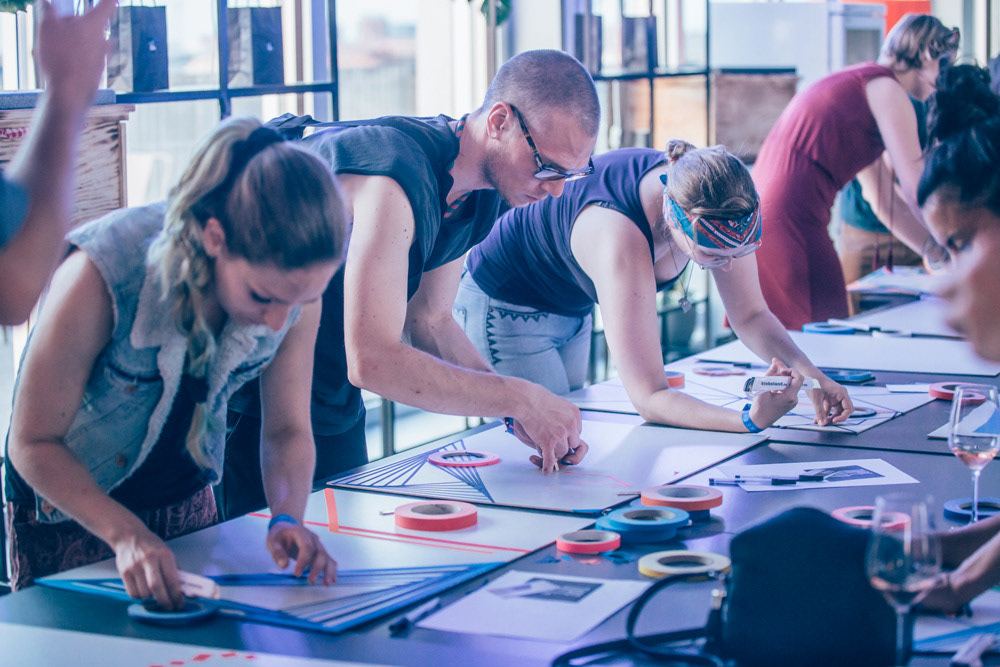
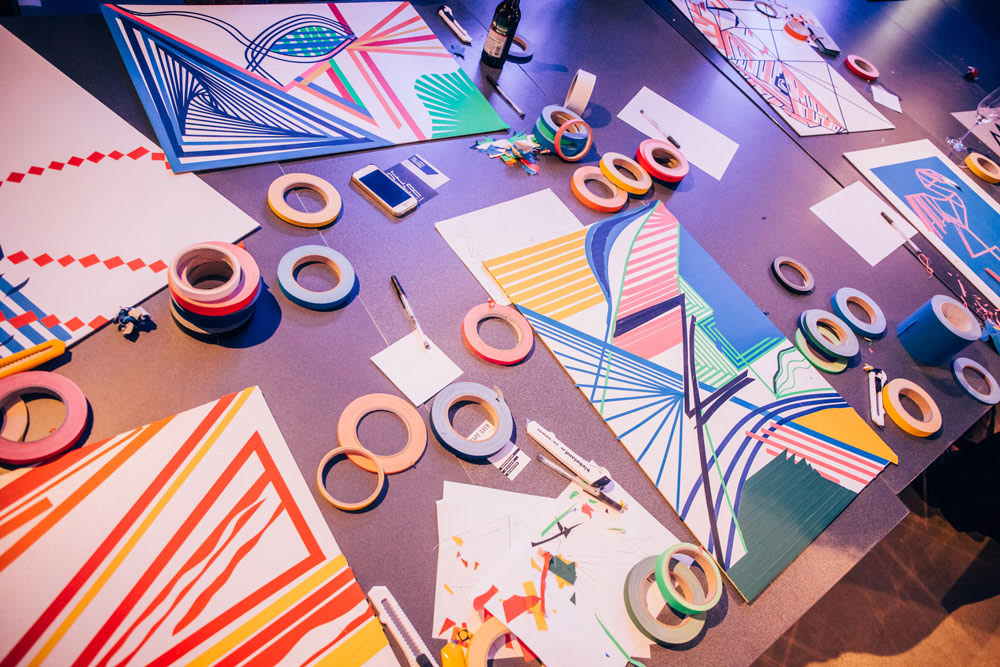
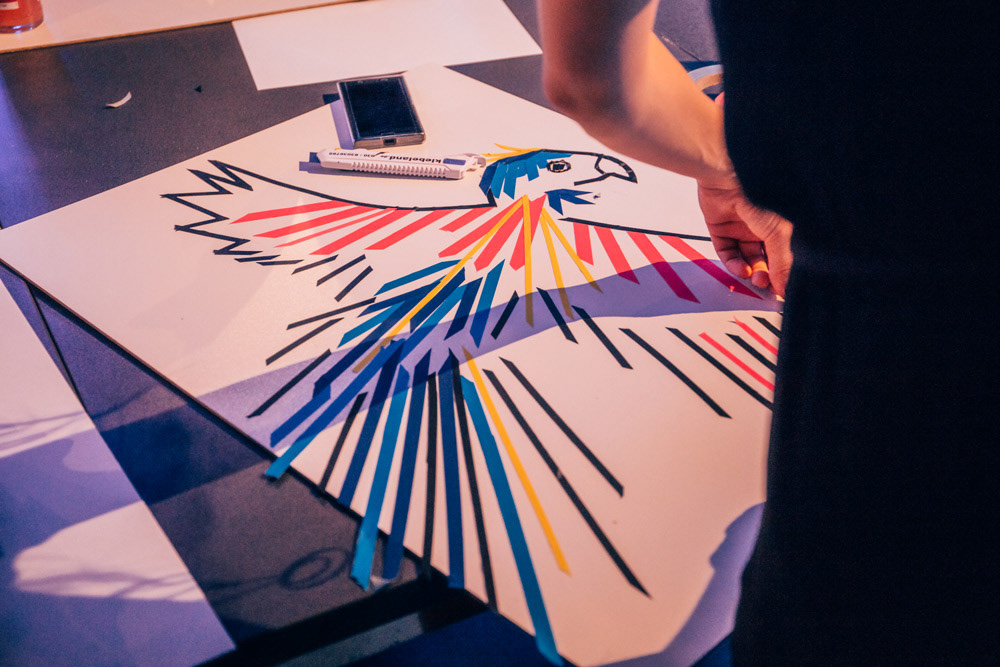
- The Transformation: Rigid lines suddenly turn into faces, typography, or abstract patterns. The TAPE OVER artists navigate the room, provide technical tips, and push participants to boldly develop their initial ideas.
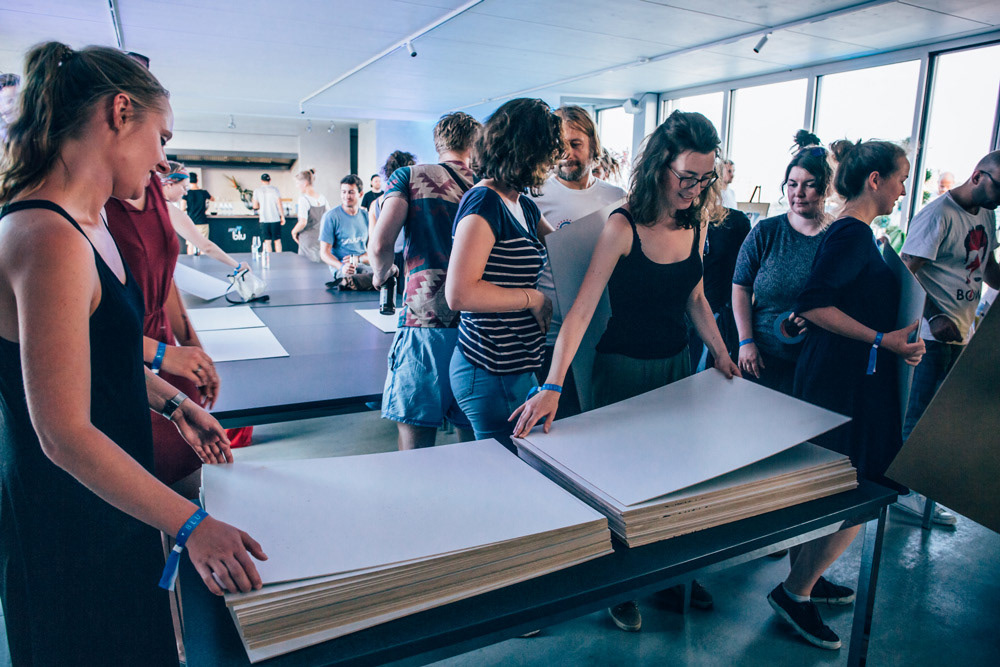
- Team Synergy: Often, individual canvases (70x50cm) merge into a large overall picture at the end. Participants must communicate, plan connections, and find compromises in design—an organic team-building exercise without the usual role-playing games.
THE TAKEAWAY: MORE THAN JUST A PICTURE!
At the end of the workshop, every participant (or the team together) holds a physical artwork in their hands. But the actual result is invisible: it is reactivated creative self-confidence. The realization that art can emerge from everyday hardware store material through a simple change of perspective. A workshop that clears the head, gets the hands dirty, and provides proof that creativity is not an elite gift, but a choice.
DER ANSATZ: WARUM TAPE ART?
Die meisten Menschen haben Angst vor einem weißen Blatt Papier oder einer leeren Leinwand. „Ich kann nicht malen“ ist der häufigste Satz zu Beginn. Tape Art bricht diese Hemmschwelle in Sekundenbruchteilen auf. Ein Klebestreifen ist kein nasser Pinselstrich, den man bereuen muss – er ist verzeihlich. Passt die Linie nicht, zieht man sie einfach wieder ab. Diese fehlerfreundliche Natur des Materials nimmt den Leistungsdruck und schafft eine Atmosphäre, in der selbst absolute Anfänger sofort ins Machen kommen. Es geht nicht um Perfektion, sondern um den mutigen ersten Schnitt.
DIE DYNAMIK: WAS PASSIERT IM RAUM?
Ein TAPE OVER Workshop ist kein stiller Kunstunterricht, sondern ein dynamischer Flow-State. Die Teilnehmer bekommen ein kurzes Briefing in die Grundtechniken (Schneiden, Reißen, Layering, Kurven kleben) und werden dann direkt auf die Materialien losgelassen.
- Vom Kopf in die Hände: Das haptische Erlebnis, das Band von der Rolle zu ziehen und die Spannung des Materials zu spüren, holt die Teilnehmer aus ihrem kognitiven Arbeitsalltag zurück in die Körperlichkeit.
- Die Transformation: Aus starren Linien entstehen plötzlich Gesichter, Typografien oder abstrakte Muster. Die Künstler von TAPE OVER navigieren durch den Raum, geben Hilfestellungen bei technischen Kniffen und pushen die Teilnehmer, ihre ersten Ideen mutig weiterzuentwickeln.
- Team-Synergie: Oft verschmelzen am Ende individuelle Leinwände (70x50cm) zu einem großen Gesamtbild. Die Teilnehmer müssen kommunizieren, Anschlüsse planen und Kompromisse beim Design finden – ein organisches Teambuilding ohne die üblichen Rollenspiele.
DAS TAKEAWAY: MEHR ALS NUR EIN BILD!
Am Ende des Workshops hält jeder Teilnehmer (oder das Team gemeinsam) ein physisches Kunstwerk in den Händen. Doch das eigentliche Ergebnis ist unsichtbar: Es ist das reaktivierte kreative Selbstvertrauen. Die Erkenntnis, dass aus alltäglichem Baumarkt-Material durch einen simplen Perspektivwechsel Kunst entstehen kann. Ein Workshop, der den Kopf lüftet, die Hände schmutzig macht und den Beweis liefert, dass Kreativität keine elitäre Gabe ist, sondern eine Entscheidung.